
My Truths About Long Wear Makeup
You've heard so much advice on long wear makeup. Here is what I know for sure from my 15+ years as a bridal artist. This is how you get to relax on your wedding day.
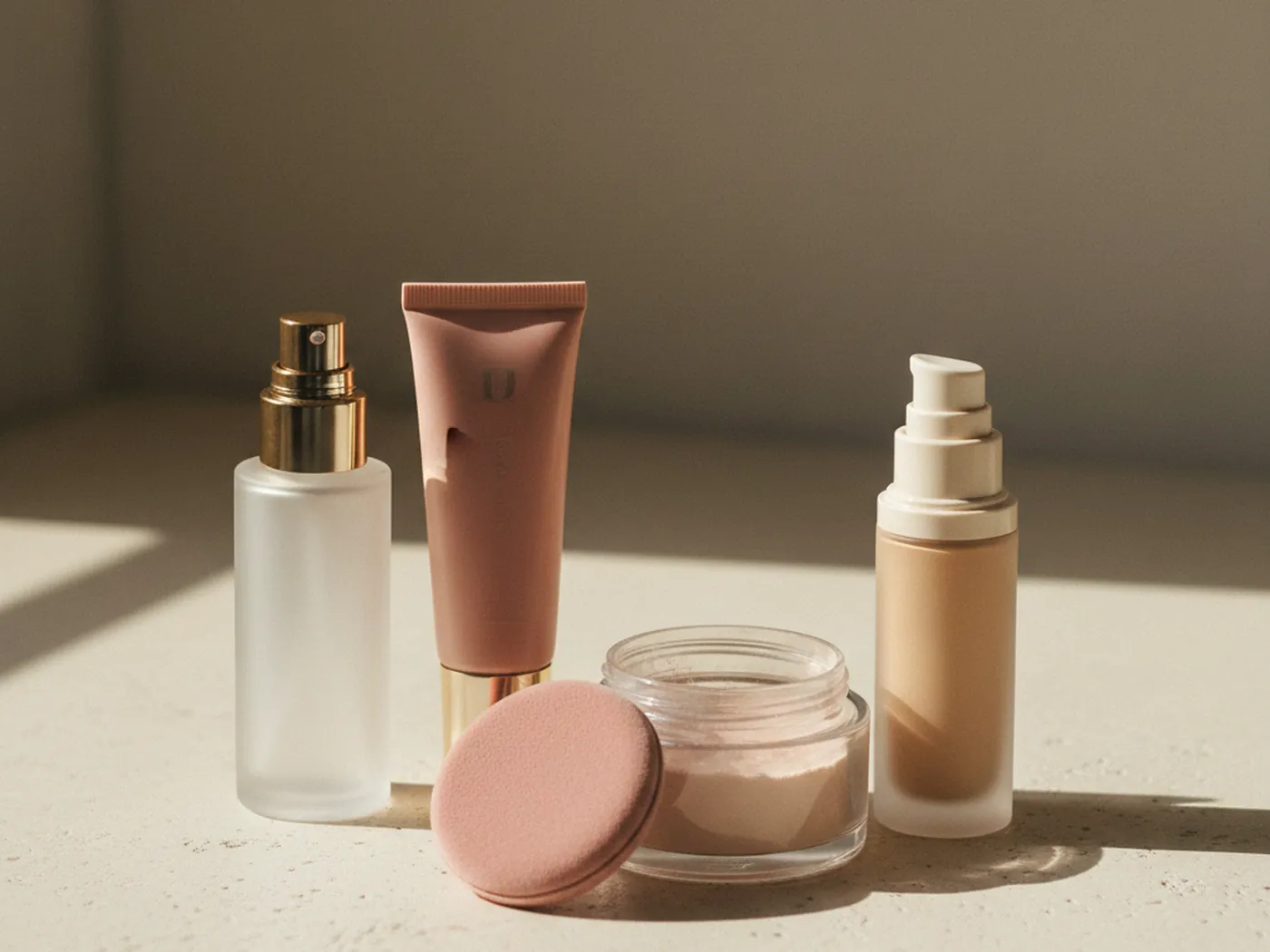
You have probably heard a dozen different tips for making your makeup last. It can be confusing when everyone tells you something different. I want to give you some simple truths instead. This is what I have learned from my 15+ years of bridal beauty, and what it means for your wedding day.
When makeup doesn't "last"
When you worry about your makeup lasting, you are usually worried about one of four things.
- It might feel like it's sliding off.
- The color might look different by the evening.
- It might rub off on a hug or your dupatta.
- It might settle into fine lines or pores.
Each one has a different cause, and a different solution. When we know what to watch for on your specific skin, we can make a plan.
Powder is not the enemy
That thick, cakey look people fear? It is usually not the powder's fault. It happens when too much product is applied at once, on skin that has not been properly hydrated.
I use powder to control shine and hold your look in place. My method is to press a small amount just where you need it, like your T-zone. Then I blot away any oil before ever adding more. This keeps you looking fresh, not heavy.
A light touch is always best. If you ever have concerns that your makeup might be causing breakouts, that is a perfect conversation to have with your dermatologist.
Coverage comes from placement, not quantity
More foundation does not mean more coverage. After a certain point, too much product can actually make your skin's texture look more obvious.
True coverage comes from careful placement. I use concealer just where it is needed to cover any blemishes or discoloration. Then I use a light layer of foundation to even out your overall skin tone. Asking foundation to do a concealer's job is the quickest way to a heavy look.
Why your foundation color can change
You may have heard of foundation "oxidizing". The truth is a little different.
What really happens is that your skin's natural oils mix with the makeup throughout the day. This can make the color appear a little deeper by evening.5, 6
This is exactly why your bridal preview is so important. We will see how the foundation wears on your skin for hours, not just in the first few minutes. It is the only way to be certain we have the perfect match for your wedding day.
Your Guide to Primer for Long Wear Makeup
Primers are everywhere, but what do they really do? The truth is, there is not a lot of research showing that primers add hours of wear time on a real person's face.
We do know they work well for correcting color. One small study showed that a pink-toned primer genuinely helped reduce the look of under-eye darkness.8
So, I do not use a primer just for the sake of it. I use one when I have a specific job in mind. It might be to help makeup cling to an oily area, or to create an even canvas on a patch of dry skin. We will decide together if you need one at all.
What Setting Spray Really Does
Setting sprays leave a very thin, flexible film over your makeup. In a lab, this film is quite impressive. It repels water and holds things in place.9
But no one has published a study that measures how many extra hours a spray gives you on a real wedding day. So I will not promise you that it is a magic shield.
I use setting spray to melt all the layers of your makeup together beautifully. It helps your finished look appear less like makeup and more like perfect skin, especially in photos.
The truth about airbrush makeup
Airbrushing applies foundation in a fine, even mist. This can create a flawless look that feels wonderfully light.
But you will hear a lot of people claim it is completely "transfer-proof". I want to be honest with you. At a South Asian wedding, with a heavy dupatta, beautiful jewelry, and hundreds of warm hugs, no makeup is completely immune to rubbing off.
I choose airbrush for its stunning finish under lights and how well it performs on certain skin types. But it is not for everyone. For very dry skin, traditional makeup applied with a brush is often a better choice. We will find what is perfect for you at your bridal preview.
What "waterproof" means for your wedding
The word waterproof can be confusing. Sunscreens in the US are not legally allowed to be called waterproof.11 That rule does not apply to cosmetics.
So yes, we use high-quality waterproof eye makeup. It is designed to hold up through all the happy tears of your ceremony.
The only thing to be mindful of is taking it off gently, as the skin around your eyes is delicate.12, 13 And I always recommend starting with a fresh tube of mascara for your wedding week, as old ones can harbor bacteria.14
The most important thing to know about SPF
Your foundation says it has SPF. Is that enough? The simple answer is no.
The SPF number on a bottle is earned in a lab with a very thick layer of product, far more than anyone would ever apply at home.17 In real-world use, you get much less protection than the number on the bottle suggests.15
For an outdoor event like a summer mehndi, this is so important. My approach is to apply a separate, dedicated sunscreen as the last step of your skin prep. We let it set, and then apply your makeup on top. That way, you are truly protected and your makeup looks flawless. Your dermatologist can give you the best advice on the right SPF for you.
What do the words on the box mean?
Labels that say "non-comedogenic" or "hypoallergenic" sound official. But often, they do not have a strict legal definition. In fact, the FDA says the term "hypoallergenic" can mean whatever a company wants it to mean.21
This is why we never try anything for the first time on a wedding day. The only true test is how a product performs on your skin. Your preview is how we make sure every product we use is one you love.
What really makes your makeup last
It is not one magic product. It is a plan.
Long-lasting makeup comes from beautiful skin preparation. It comes from choosing the right formula for your skin, not just a popular one. And it comes from having a simple touch-up kit ready for later in the day.
Humidity in Virginia does not have to be a worry. It just means makeup takes longer to set. We plan for that. A July wedding is a different job than a November one, and we are ready for both. You can see how these choices come together on the bridal page.
Questions to help you find your artist
When you meet with any makeup artist, these questions will help you feel confident. Good answers should feel like a comfortable conversation.
- What is your plan to make my makeup last all day on my skin type?
- Will you use a primer on me? Why or why not?
- How do you use powder to keep me looking fresh, not heavy?
- How will we know this foundation shade is the right one, hours from now?
- What is our plan for touch-ups during the wedding?
You should feel heard and understood. If you want to talk about your own wedding week, I am here. Just get in touch.
Our Sources
We believe in sharing what we know. Any scientific claims in this article are backed by these sources. All other advice comes from my 15+ years of experience with brides just like you.
- Sunscreen and prevention of skin aging: a randomized trial Annals of Internal Medicine, 2013
- Sunscreen FAQs American Academy of Dermatology, current
- UV imaging reveals facial areas that are prone to skin cancer are disproportionately missed during sunscreen application PLOS ONE, 2017
- Photoprotection beyond ultraviolet radiation: a review of tinted sunscreens Journal of the American Academy of Dermatology, 2021
- A theoretical and experimental study of the temporal reduction in UV protection provided by a facial day cream International Journal of Cosmetic Science, 2018
- Restoring Skin Hydration and Barrier Function: Mechanistic Insights Into Basic Emollients for Xerosis Cutis International Journal of Dermatology, 2025
- The science behind skin care: Moisturizers Journal of Cosmetic Dermatology, 2018
- The science behind skin care: Cleansers Journal of Cosmetic Dermatology, 2018
- Face washing 101 American Academy of Dermatology, current
- Should I apply my skin care products in a certain order? American Academy of Dermatology, current
- I have acne! Is it okay to wear makeup? American Academy of Dermatology, current
- Facial contact dermatitis caused by cosmetic-relevant allergens Contact Dermatitis, 2021
- Allergenic Ingredients in Facial Wet Wipes Dermatitis, 2017
- Clinical Profile and Allergens in Pigmented Cosmetic Dermatitis and Allergic Contact Dermatitis to Cosmetics in India Dermatitis, 2018
- Eyelid dermatitis in patients referred for patch testing Journal of the American Academy of Dermatology, 2021
- Eye Cosmetic Safety US Food and Drug Administration, current
- Kohl, Kajal, Al-Kahal, Surma, Tiro, Tozali, or Kwalli: By Any Name, Beware of Lead Poisoning US Food and Drug Administration, current
- Sunscreens part 1: Mechanisms and efficacy Journal of the American Academy of Dermatology, 2025
- A re-evaluation of the comedogenicity concept Journal of the American Academy of Dermatology, 2006
- Early detection of microcomedones induced by cocoa butter using reflectance confocal microscopy Journal of Cosmetic Dermatology, 2022
- Hypoallergenic Cosmetics US Food and Drug Administration, current
You might also like
A Guide to Bridal Makeup for Oily Skin
Worried about bridal makeup for oily skin or dry patches? Learn how we prepare your skin and choose products to ensure a flawless look that lasts.
How to Find Your Skin Undertone for a Perfect Foundation Match
Struggling to find foundation for brown skin? Learn how to find your skin undertone to choose a shade that looks perfect from morning to night.
Your Wedding Day Touch Up Kit
A wedding day is long. Learn what to pack in your wedding day touch up kit to feel fresh and confident from the first photo to the last dance.